


How much does security cost in terms of sustinability?
The female analysis of Under 30 Think Tank Secursat
The Secursat Team composed of young women with different skills, experiences and training paths has measured the environmental impacts of traditional safety activities on over 1,000 sites and about 15,000 plants, to provide a framework on how digitisation pathways can positively impact a sustainable security management model.
Security and sustainability, in the model implemented by Secursat, are two concepts that travel hand in hand. We analyze and manage the risks of our customers to ensure business continuity, and today more than ever to ensure business continuity we need to rethink traditional processes towards digital and remote models, and above all, looking to the near future, also sustainable. Too often, safety and ecological transition are considered as costs, mandatory paths to comply with regulations. In our opinion, however, if they are rooted in the depths of an organization, two powerful tools to allow companies to be competitive in the market while keeping the operating costs of the structures low without sacrificing activities, and our analysis proves it with numbers.
Over the years, Secursat has focused on the training of resources and the integration of young and very young people in the company combining analytical skills, criminologists, certified security managers and computer skills to build a new and sustainable security model based on risks and data. Through major investments in secure and complex network infrastructures, it has set up a model based on the remote management of plants and systems that allows to digitize many activities traditionally still, unfortunately, carried out on-to collect millions of useful data to redirect resources and processes. The analysis carried out by the Secursat team focused on understanding how traditional activities, such as maintenance of mechanical and electronic systems or surveillance activities have an impact on the environment and how a remote model can reduce mobility with significant impacts on environmental sustainability.
The analysis has been carried out on over 1,000 sites of different nature located throughout Italy, from retail stores of international and national brands, to banks, industrial, production and logistics centers, up to sites belonging to the sports sectors, art and culture, on the biennium 2020-2021.
The Secursat analysis focused on the electronic security systems present within the sites of our customers connected to a network and then monitored remotely. The data collected over time, thanks to the use of software platforms on the cloud, allowed us to obtain a timely picture of the more than 4,500 ordinary maintenance interventions carried out on-site in the 1,000 sites examined. Through the Remote Maintenance model, in the two-year period 20 -21 it was possible to carry out 18% of these 4,500 ordinary maintenance interventions, where technologies and connections in the field allowed it, remotely, reducing unnecessary mobility".
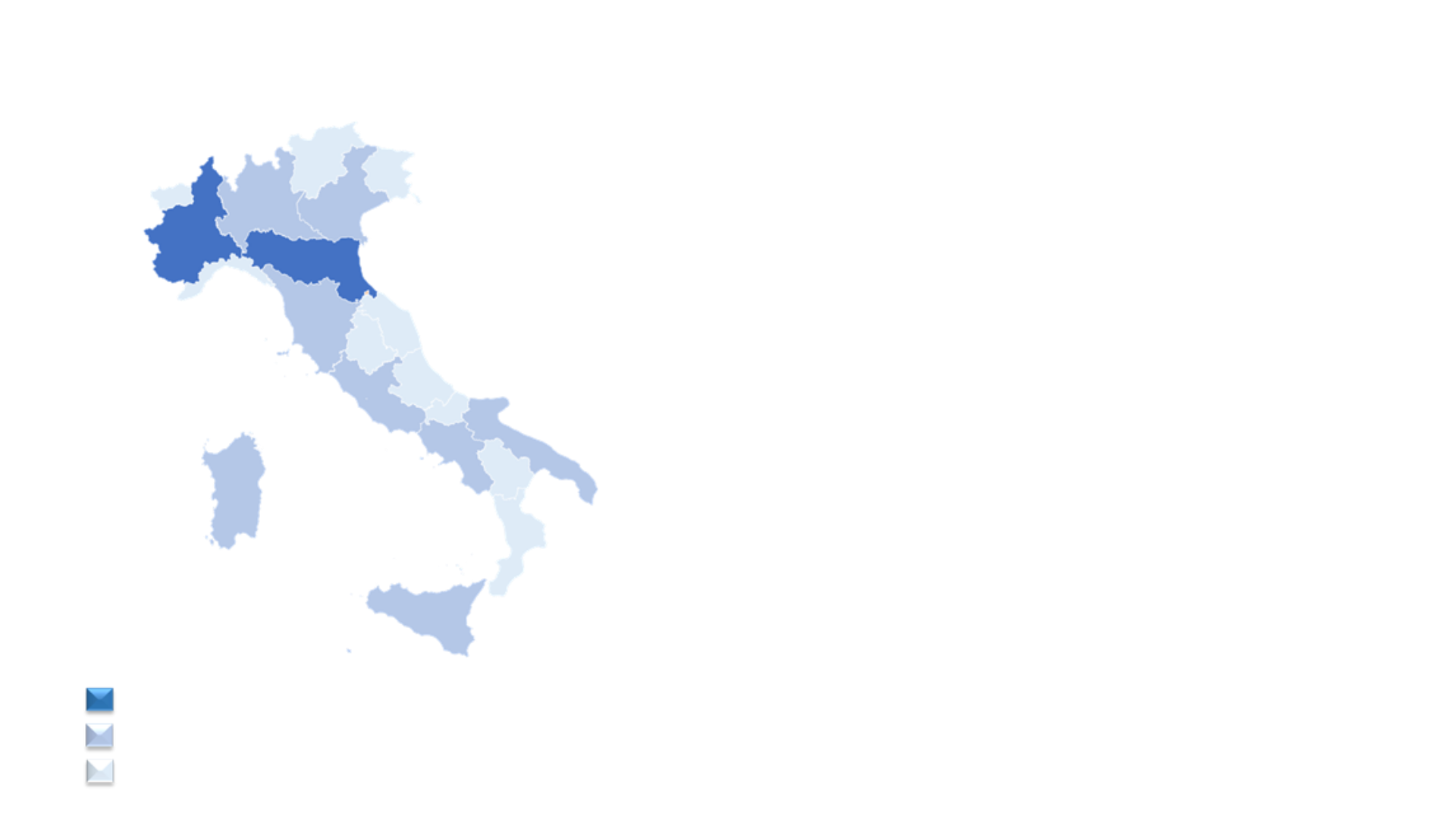
More than 23 tons of CO2 released into the atmosphere thanks to over 200,000 km less travelled, only thanks to maintenance activities, of which almost 100,000 in Lombardy alone. 60% of this data refers to sites and activities carried out in Lombardy and Piedmont and this depends on the technological choices of companies that, In recent years, they have invested more in native digital technologies able to take advantage of the benefits of the network and thus be fully maintained remotely.
To achieve this we started from the idea that every service, activity or process managed for our customers had to be mapped and monitored so that it could be measurable. Our reflection, that the data confirm, is that today the product becomes a commodity and that it is the model of management of the technology to make the difference. Business continuity means this for us, not to give up no-core activities, such as maintenance, to pursue a logic of cost cuts, but to rationalize resources and activities through digital and sustainable processes.
Today, we are not only able to remotely manage our customers' sites and systems through our infrastructure, but we are also able to help companies implement this path internally, even on other processes. We believe that, finally, the time is ripe and that the start of this path as soon as possible will allow companies to better redirect resources, today, to ensure the continuity of business tomorrow.
This study, which gives an idea of the enormous impact that the digitalization of processes can have on organizations and the environment brings to light the reflection on how digital transaction paths, and implementation of the cloud can be very fast if accompanied by a general reorientation of the processes of the entire organization, but also highlights the reflection that the Italian entrepreneurial fabric will have to reckon, in the not too distant future, with implementation paths of field technologies and deep reflections on communication infrastructure.
Leggi altre News




Innovazione, Integrazione e Sostenibilità per la nuova sede di Zamasport
Consulting
In occasione della realizzazione della nuova sede a Novara di Zamasport - il gruppo italiano che dal 1966 si occupa dello sviluppo e della produzione di abbigliamento di alta moda dei più grandi marchi del lusso italiani e internazionali - ...
AC Monza: Il progetto di Security per lo stadio ed il centro sportivo
Consulting
Da un lato la necessità di garantire la sicurezza per la migliore fruizione degli eventi sportivi e dall'altro la crescente attenzione ai temi della sostenibilità che stanno scuotendo sempre più i mercati globali, interessando anche il ...